

Key Takeaways
- Semaglutide is a once-a-week shot just under the skin of the stomach, the front of the thigh, or the back of the upper arm.
- Switch to a different area each week and keep a simple log of the date and the spot.
- If you draw your dose from a vial, units, milliliters and milligrams are not the same thing. The FDA has linked mix-ups to real overdoses.
- Keep it cold and out of the heat. A parked car in Las Cruces is no place for your medicine.
- When in doubt about a dose, stop and call your physician before you inject.
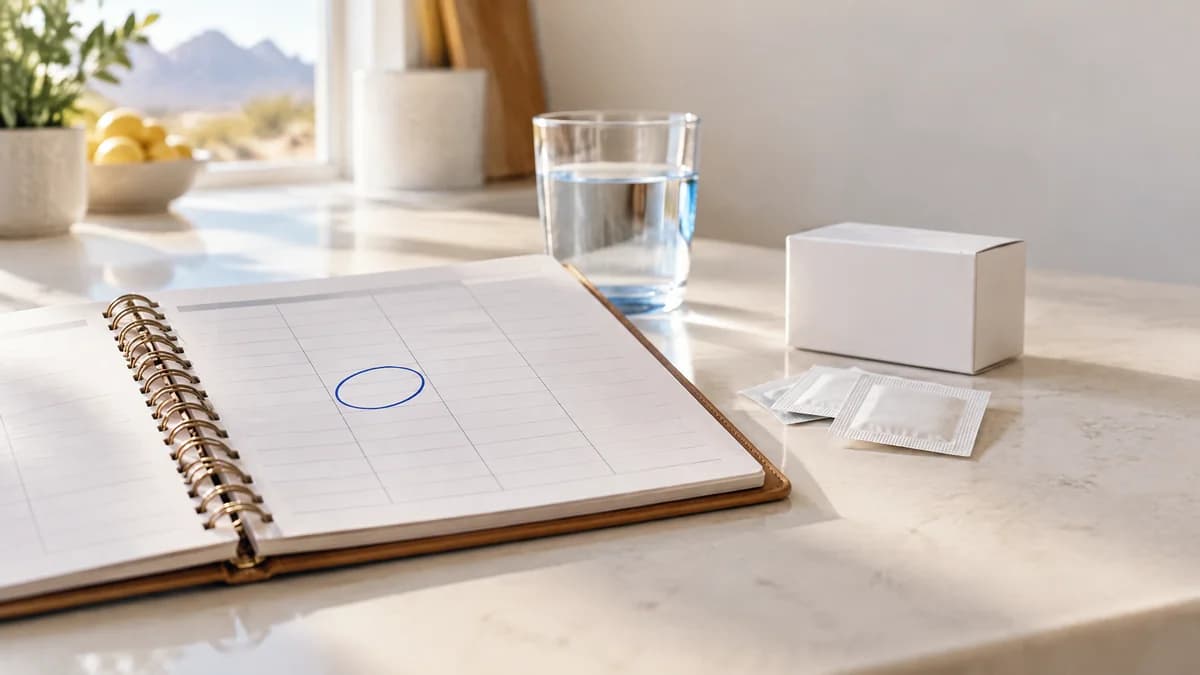
Learning how to inject semaglutide is the part of a GLP-1 plan that makes many people in Las Cruces the most nervous. It is also the part that gets easy fastest. Semaglutide is a once-a-week shot given just under the skin, and with a clean routine most people stop thinking twice about it within a few weeks.
This guide walks through the steps, the three standard injection sites, how to rotate them, how to read a dose from a vial without making a costly mistake, what to do about a missed dose, and how to store your medicine in the New Mexico heat. It does not replace the hands-on teaching you get from your own physician, so keep their written instructions next to this page.
How do you inject semaglutide?
Semaglutide is injected once a week into the fat layer just under the skin, not into a muscle or a vein. You clean a spot on the stomach, thigh or upper arm, give the exact dose you were prescribed, hold the needle in for a few seconds, and drop it straight into a sharps container. The whole thing takes a couple of minutes.
The steps below follow the technique taught in Mayo Clinic's guide to injecting semaglutide. Pens and syringes differ in the details, so the instructions that came with your product always win.
- 1Wash your hands and check the medicine. Semaglutide should look clear and colorless. Do not use it if it looks cloudy, has changed color, or has particles in it, and check the date and the strength on the label.
- 2Pick this week's spot and clean it. Choose the stomach, the front of a thigh, or the back of an upper arm, a different area from last week. Wipe it with an alcohol pad and let it dry.
- 3Set the dose exactly as written. With a pen, dial or select the dose your physician prescribed. With a vial, draw up the amount on your written instructions, no more and no less, and remove large air bubbles.
- 4Give the shot just under the skin. Insert the needle straight in, as you were shown, and press the plunger or button slowly. Hold it in place for a few seconds before you pull it out so the full dose goes in.
- 5Drop the needle in a sharps container. Do it right away, without putting the cap back on. Then write down the date and the spot you used.
A small amount of redness or itching where you injected is common and usually fades. Bleeding a drop or two is normal too. Press with a cotton ball, and do not rub the spot.
Where should you inject semaglutide?
The three standard places are the stomach, at least 2 inches away from the belly button, the front of the thigh, and the back of the upper arm between the shoulder and the elbow. Each has a layer of fat the medicine absorbs from, and none of them is clearly better than the others.
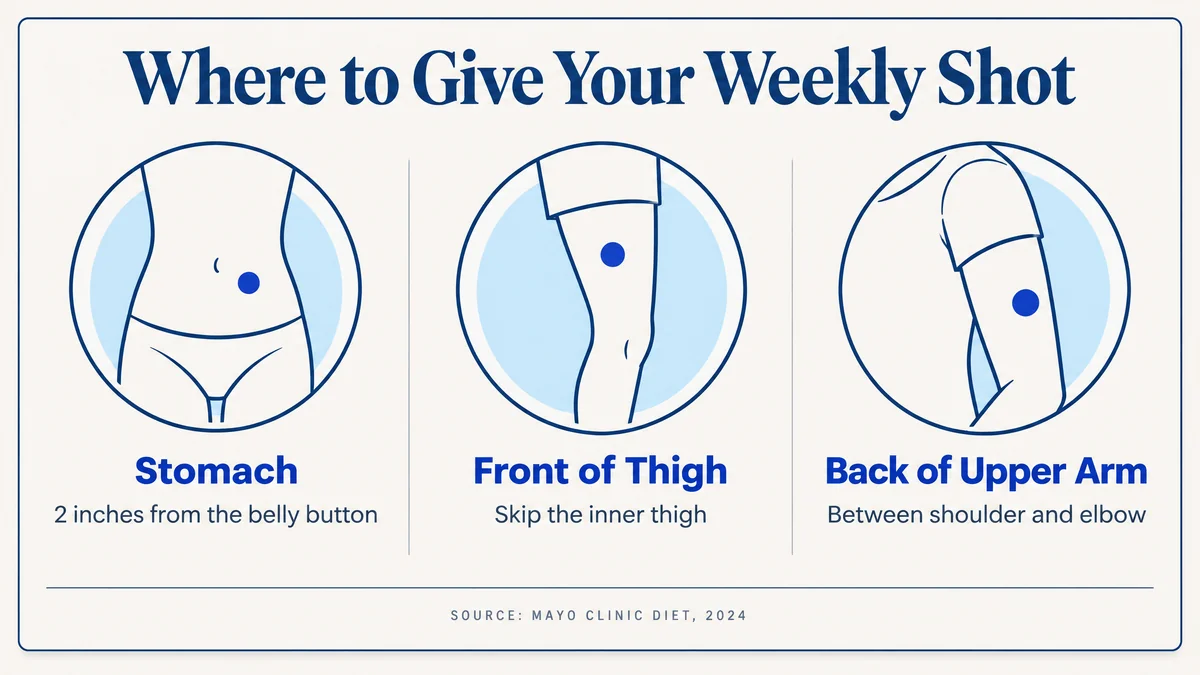
- Stomach. The easiest spot to see and reach on your own. Stay at least 2 inches from the belly button and away from your waistband.
- Front of the thigh. Use the upper front of the leg, not the inner thigh.
- Back of the upper arm. Harder to reach by yourself, so many people save it for a week when a partner can help.
We also suggest skipping any patch of skin that is bruised, tender, scarred, or irritated, and any spot where you have a mole or a tattoo. It is easier to check how the skin heals when it starts out clear.
Do you need to rotate semaglutide injection sites?
Yes. Use a different body area each week, for example stomach, then thigh, then arm, and keep a simple log of the date and the spot. Rotating helps prevent irritation, soreness, and skin changes from shots landing in the same place week after week.
The easiest system is the one you will actually keep. A note on your phone works, and so does a paper calendar on the fridge. Write the date and a letter for the site, such as S, T or A, and check last week's entry before you start. If you also take another injected medicine, ask your physician whether the two shots can share an area on the same day.
If a dose ever looks different from what you expect, stop and call us before you inject. A short phone call beats a week of feeling sick.
How do you measure a semaglutide dose from a vial?
Draw up exactly the amount written on your instructions for your specific vial, using the syringe your pharmacy or clinic gave you, and check it twice before you inject. Compounded semaglutide comes in different strengths, so a dose in “units” only makes sense for the vial it was written for.
This is where real harm has happened. In 2024 the FDA warned about dosing errors with compounded semaglutide sold in multiple-dose vials. Most reports described patients drawing up more than their prescribed dose, and in those cases people took 5 to 20 times the intended dose (FDA, 2024). Some needed hospital care. In several reports the patient was told to give 5 units with a U-100 insulin syringe and drew up 50 units instead.
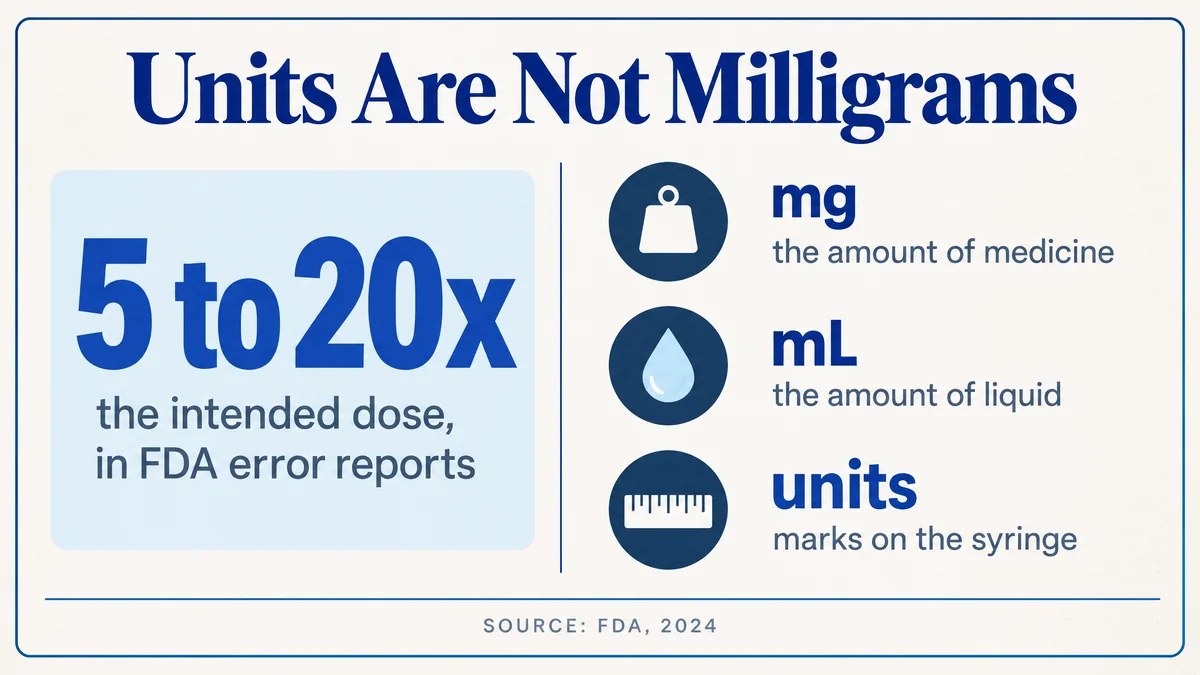
| Term | What it measures | Where you see it |
|---|---|---|
| mg (milligrams) | The amount of medicine | Your prescription and the dose plan |
| mL (milliliters) | The amount of liquid | The vial label and some syringes |
| Units | Marks on an insulin-style syringe | Many compounded dosing sheets |
Before your first vial dose, make sure you know
- Your dose in milligrams, and the strength printed on your vial
- Exactly which line on your syringe to fill to
- That the syringe you were given is the right size for that dose
- Who to call if anything on the label or the syringe looks different
The FDA also notes that semaglutide stays in the body a long time, with a half-life of about one week, so the effects of too large a dose can last for days. Severe nausea, vomiting that will not stop, belly pain, or feeling faint after a dose are reasons to call your physician right away. For an urgent question about a possible overdose, Poison Control is available at 1-800-222-1222, and for trouble breathing or fainting, call 911.
Brand-name semaglutide comes in prefilled pens dosed in milligrams, which removes most of this risk. Our guide to semaglutide side effects explains which symptoms are expected early on and which ones are not.
What day and time should you take semaglutide?
Take semaglutide on the same day each week. The time of day is up to you, and it can be taken with or without food. Choose a day that is usually calm, set a repeating reminder, and keep your supplies in one place so the routine is simple.
Some people like an evening shot so any queasiness happens while they sleep. Others prefer a weekend morning when they are home. There is no right answer. If you want to move your shot to a different day, ask your physician first so two doses do not land too close together.
What should you do if you miss a semaglutide dose?
For brand-name Wegovy, take the missed dose as soon as you remember if your next dose is more than 2 days (48 hours) away. If it is less than 2 days away, skip the missed dose and take the next one on your usual day. That rule comes from the Wegovy prescribing information.
The same label adds that if you miss 2 or more weekly doses in a row, you should contact your physician to talk about how to restart, since they may restart you at a lower dose. Our own advice is simple: never take two doses close together to make up for a missed one. If your semaglutide is compounded, follow the missed-dose plan your physician gave you for your specific product.
How should you store semaglutide?
Keep semaglutide in the refrigerator, away from the freezer, and out of heat and direct light, unless the label for your product says otherwise. Never let it freeze, and do not leave it in a hot car.
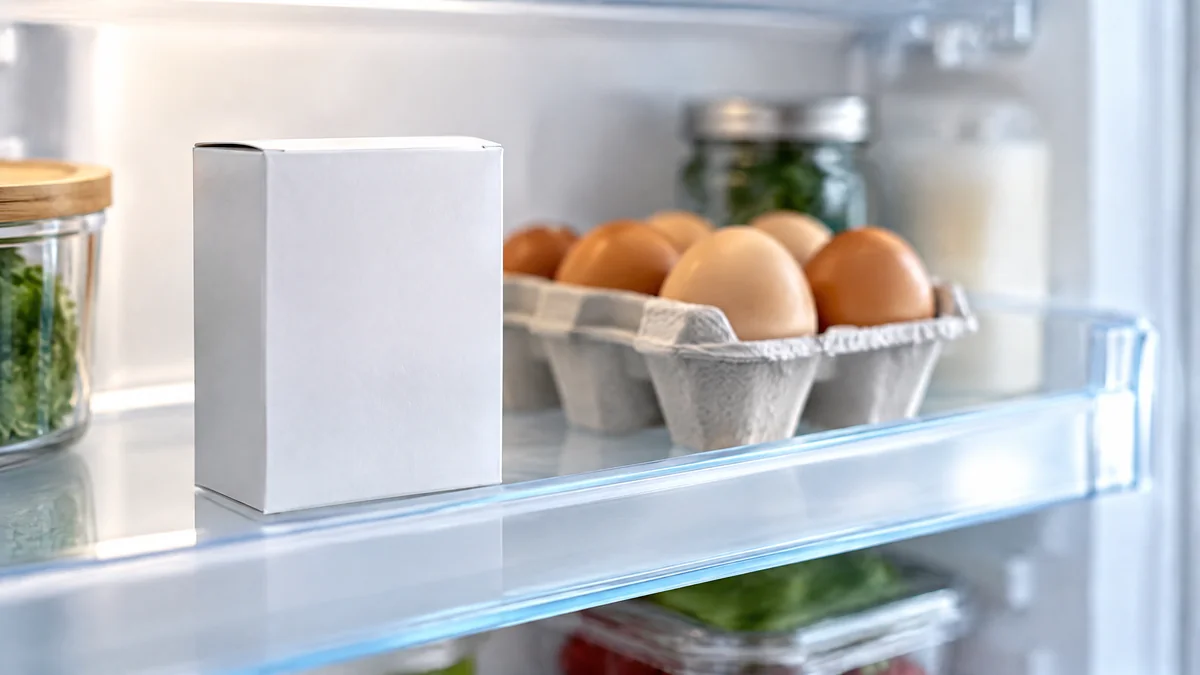
For brand-name Wegovy, the label says single-dose pens can be kept between 46°F and 86°F in their carton for up to 28 days if needed, and should be thrown away if they freeze or get warmer than 86°F. In Las Cruces, a parked car can pass that in minutes on a summer afternoon, so carry your medicine with you on errand days. If you travel, a small insulated bag with a cold pack works well, as long as the pen or vial does not touch the ice directly.
Compounded vials have their own storage rules and their own “use by” date after first opening. Read the pharmacy label, and ask us if anything on it is unclear.
How do you get rid of used semaglutide needles?
Put every used needle into a sharps disposal container right after the shot. Do not put the cap back on, do not throw loose needles in the trash, and do not reuse or overfill the container. This follows the FDA's guidance on getting rid of used needles.
When the container is about three-quarters full, close it and check with your local trash service or health department about how to drop it off in Doña Ana County. Keep it somewhere children and pets cannot reach, and if you travel, bring a small travel-size sharps container.
How do you learn to inject semaglutide in Las Cruces?
At Fountain of Youth LC, semaglutide starts with a consultation, lab work, and a review of your health history with one of our two licensed physicians. If it is a good fit, we explain the dose plan and how to inject, and we see you again as the dose goes up. If you choose a vial for self-injection, we make sure you know your dose, your syringe, and the line you fill to before you go home.
Semaglutide is not right for everyone. It should not be used by anyone with a personal or family history of medullary thyroid cancer or MEN 2, and it is not used during pregnancy, which is why a physician evaluation always comes first. Compounded semaglutide is not FDA-approved, so it is worth asking any clinic which form you are getting and where it is made.
Read how our medical weight loss program in Las Cruces works, see current prices on our pricing page, or read what happens at a first weight loss consultation. If you are still choosing a medicine, our semaglutide vs. tirzepatide guide compares the two. Patients also come to us from Mesilla, Anthony, and El Paso, and visits can be in English or Spanish.
Frequently asked questions
Is it better to inject semaglutide in the stomach or the thigh?
Either works. The stomach, the front of the thigh and the back of the upper arm are the standard places for an under-the-skin shot, and each has a fat layer the medicine absorbs from. Pick the spot that is easiest for you to reach and see, then switch to a different area the next week so one patch of skin is not used over and over.
What time of day should I take semaglutide?
Any time of day works, with or without a meal. What matters is taking it on the same day each week. Many people pick a calm evening or a weekend morning and set a phone reminder. If you need to change your shot day, ask your physician how to do it so the doses do not end up too close together.
What happens if I miss a semaglutide dose?
For brand-name Wegovy, the label says to take the missed dose as soon as you can if your next dose is more than 2 days (48 hours) away, and to skip it if the next dose is less than 2 days away. If you miss 2 or more weeks in a row, call your physician before restarting. For a compounded vial, follow the plan your physician gave you.
Does a semaglutide shot hurt?
The needles used for under-the-skin shots are short and thin, and the feeling is usually brief. Letting an alcohol-cleaned spot dry fully before the shot, keeping the muscle relaxed, and switching sites each week can all make it more comfortable. Call us if a spot stays red, swollen or painful for more than a day or two.
How do I know how many units to draw from my vial?
Only from the written instructions your prescriber and pharmacy gave you for your exact vial, because compounded semaglutide comes in different strengths. The FDA has warned that confusing milligrams, milliliters and units has caused overdoses. If your dose is written in units, ask us to show you the line on your syringe before your first shot.

Joanna Rachelson, MD
Physician at Fountain of Youth LC in Las Cruces, New Mexico, where the team provides physician-supervised medical weight loss, hormone therapy, and wellness care. Read more about Dr. Rachelson.
Medically reviewed by Laura Leija-Urrea, MD
Start your weekly shot with confidence.
Our physicians in Las Cruces check your labs and history first, then show you exactly how to give your dose.
Disclaimer: This content is for informational purposes only and is not medical advice. Results vary by individual and are not guaranteed. Semaglutide is a prescription medication that requires a physician evaluation, is not appropriate for everyone, and can cause side effects. Compounded semaglutide is not FDA-approved. Always follow the instructions from your own prescriber and pharmacy. Before starting, changing, or stopping any treatment, consult a licensed healthcare provider.