

Key Takeaways
- Some of the weight lost on semaglutide is lean muscle, not only fat.
- Eating enough protein is the single most protective daily habit.
- Resistance training tells your body to keep the muscle it has.
- A steady, physician-guided pace protects muscle better than crash loss.
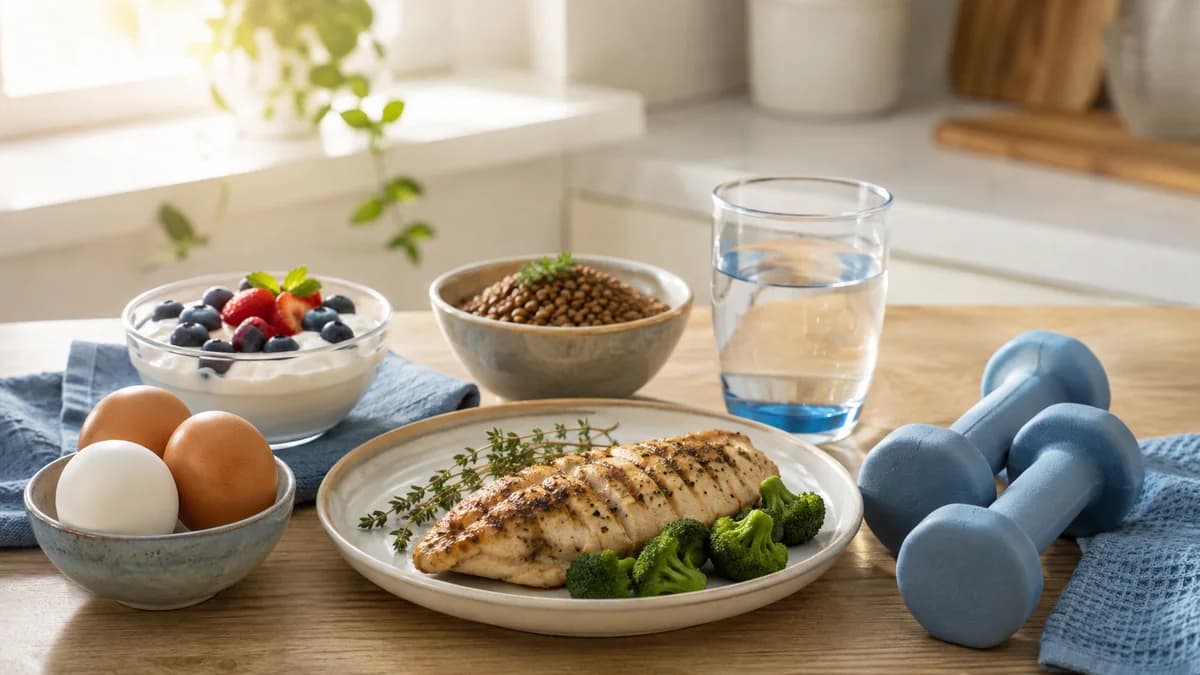
If you are losing weight on semaglutide in Las Cruces, the goal is not just a smaller number on the scale. It is losing fat while keeping the muscle that keeps you strong, steady on your feet, and metabolically healthy. Any rapid weight loss draws on both fat and lean tissue, so a little planning goes a long way. At Fountain of Youth LC, Dr. Joanna Rachelson and Dr. Laura Leija-Urrea build muscle protection into every weight loss plan through three simple levers: enough protein, regular resistance training, and a steady, supervised pace.
Why does semaglutide cause muscle loss?
Semaglutide does not target muscle directly. What happens is simpler: when you lose weight quickly on any plan, your body pulls from both fat stores and lean tissue. A review in Diabetes, Obesity and Metabolism found that with GLP-1 based therapies, lean mass can account for a meaningful share of the total weight lost, in some studies roughly a quarter to 40 percent, depending on age, diet, and activity.
A few things about GLP-1 medications make this worth attention. Semaglutide quiets appetite, so it is easy to eat far less overall, and protein is often the first thing that slips. Lower total food intake, less protein, and less activity together create the conditions where muscle is more likely to go along with the fat. The good news is that each of those is something you can influence.
- Rapid loss naturally pulls from both fat and lean tissue.
- A quieter appetite makes it easy to under-eat protein.
- Less movement removes the signal that tells muscle to stay.
Why does keeping muscle matter so much? Muscle drives your metabolism, supports your joints and balance, and helps you stay strong and independent as you age. Protecting it now also makes it easier to keep the weight off later, since muscle burns more energy at rest than fat does.
How much protein do you need on semaglutide?
Protein is the single most protective habit. During active weight loss, many physicians suggest aiming for roughly 1.0 to 1.5 grams of protein per kilogram of body weight per day, spread across meals. Research on preserving muscle during weight loss supports intakes above the basic minimum to protect lean mass.
Because semaglutide shrinks your appetite, the practical trick is to eat protein first at every meal, before you feel full. That way the food that protects your muscle is the food you actually get to. Spreading protein through the day, rather than saving it all for dinner, also helps your body use it.
- Lead each meal with a protein: eggs, Greek yogurt, chicken, fish, tofu, or beans.
- Aim for a palm-sized protein serving at breakfast, lunch, and dinner.
- Keep easy options ready for low-appetite days, like a protein shake or cottage cheese.
- Pair protein with water and fiber to stay comfortable and full.
For a fuller plan, see our guide on what to eat on semaglutide. Your exact protein target should fit your kidney health, other conditions, and goals, which is something your provider sets with you.
Does resistance training protect muscle on GLP-1?
Yes, and it is powerful. Resistance training is the signal that tells your body to hold on to muscle while you shed fat. In a randomized trial on weight loss in older adults, combining a higher-protein diet with resistance exercise helped preserve, and in some cases build, fat-free mass during weight loss.
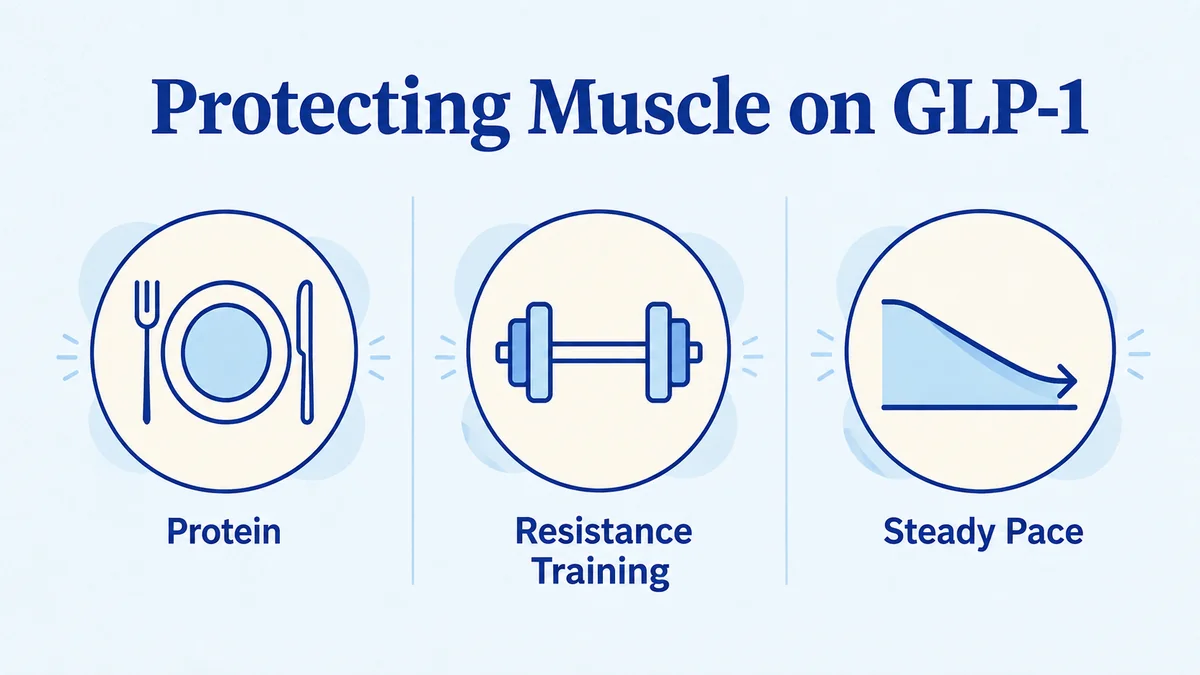
You do not need a gym membership or heavy barbells. Two to three short sessions a week is enough for most people to make a real difference. Start where you are and add a little over time.
- Two to three sessions a week, hitting the major muscle groups.
- Use resistance bands, dumbbells, or your own body weight.
- Cover the basics: squats or sit-to-stands, rows, presses, and a carry.
- Add a daily walk for heart health, but let strength work do the muscle protecting.
If you are new to strength training or have joint concerns, start light and focus on good form. In the Las Cruces heat, indoor or early-morning sessions are easier to keep up with, and consistency beats intensity every time.
Why does a steady pace matter?
A steady pace protects muscle better than crash loss. When weight comes off very fast, a larger share of it tends to be lean tissue. A gradual approach, guided by slow dose increases, gives your body time to lean on fat stores while your protein and training keep muscle in place.
This is one reason physician-supervised programs matter. We start every patient on a low dose and increase it slowly, watching how your body responds rather than pushing for the fastest possible number. A sensible target for many people is a gradual, sustainable rate rather than dramatic weekly drops. If you want to understand the timeline better, our post on how long semaglutide takes to work walks through what to expect.
A steady plateau is not always a problem
If your weight loss slows or levels off, that is common and often healthy, especially when you are keeping muscle. Learn why in our guide to why weight loss stalls on GLP-1 medications.
What does a muscle-protecting day look like on semaglutide?
You do not need anything complicated. A muscle-protecting day simply front-loads protein, includes a little movement, and fits strength work into the week. The point is to make the protective choices the easy, default ones, so they still happen on the days your appetite is low and you would rather skip a meal.
Here is a realistic template many of our Las Cruces patients use. Adjust portions and timing to your own schedule and health, and treat it as a starting point rather than a strict rule.
- Morning: a protein-forward breakfast such as eggs or Greek yogurt, plus a full glass of water before the day gets busy.
- Midday: a palm-sized portion of lean protein with vegetables, eaten slowly so the appetite signal has time to catch up.
- Two or three days a week: a 20 to 30 minute strength session, even at home with bands or dumbbells.
- Evening: another protein serving, a short walk, and a consistent bedtime, since sleep supports recovery.
On low-appetite days, a protein shake or a few bites of cottage cheese still counts. Consistency over the week matters far more than any single perfect day, and small, repeatable choices are what protect your muscle over months of weight loss.
How do you know if you are losing muscle?
The scale alone will not tell you. If you feel weaker, more tired than the weight loss should explain, or notice everyday tasks getting harder, those can be hints that too much lean mass is going. Tracking strength and how you feel is often more useful than the number on the scale.
- Noticeable loss of strength or stamina during normal activity.
- Feeling shaky, weak, or unusually fatigued beyond the first weeks.
- Losing weight very fast while eating little protein and not training.
If any of these sound familiar, tell your provider. We can adjust your pace, revisit your nutrition, and add or fine-tune your strength routine. And if you have already lost some muscle, do not worry, muscle responds to training and protein at any age, so it can be rebuilt as your weight stabilizes. New to the whole process? Start with our medical weight loss guide.
Frequently asked questions
Does semaglutide make you lose muscle?
Semaglutide itself does not target muscle, but any rapid weight loss draws on both fat and lean tissue. Research shows a meaningful share of the weight lost on GLP-1 medications can be lean mass, which is why protein, strength training, and a steady pace matter so much.
How much protein should I eat on semaglutide?
Many physicians suggest aiming for roughly 1.0 to 1.5 grams of protein per kilogram of body weight per day during active weight loss, spread across meals. Because semaglutide curbs appetite, it helps to eat protein first at each meal. Your provider can set a target that fits your health.
Do I need to lift weights on semaglutide?
Resistance training is one of the most effective ways to signal your body to hold on to muscle while you lose fat. Two to three short sessions a week, using bands, dumbbells, or your own body weight, is enough to make a real difference for most people.
Can I rebuild muscle lost on a GLP-1?
Yes. Muscle responds to training and adequate protein at any age. If you have lost some lean mass, a consistent strength routine paired with enough protein can help you rebuild it, especially once your weight stabilizes.
Is losing muscle on semaglutide dangerous?
Losing some lean mass is normal with any weight loss, but too much can lower strength, slow metabolism, and affect balance over time. That is exactly why physician-supervised programs track your pace and habits rather than chasing the fastest possible number on the scale.

Joanna Rachelson, MD
Dr. Joanna Rachelson is a licensed Family Medicine physician at Fountain of Youth LC in Las Cruces, NM, where she and Dr. Laura Leija-Urrea, MD, lead physician-supervised medical weight loss, hormone therapy, and IV wellness care. Meet the team.
Want to lose fat and keep your strength?
Book a consultation and our Las Cruces physicians will build a plan that protects your muscle while you lose weight.
Disclaimer: This content is for informational purposes only and is not medical advice. Results vary by individual and are not guaranteed. Semaglutide is a prescription GLP-1 medication that requires a physician evaluation, is not appropriate for everyone, and can cause side effects. Before starting, changing, or stopping any medication or exercise program, consult a licensed healthcare provider.