

Key Takeaways
- Some weight regain after stopping semaglutide is common, but not inevitable.
- The habits you build during treatment are what keep the weight off after.
- Protein, strength training, sleep, and routine are the core of maintenance.
- A supervised, gradual transition beats stopping suddenly on your own.

Reaching your goal weight on semaglutide is a real achievement. The next question, and the one that matters most for the long run, is how to keep it. Weight regain after a GLP-1 program is common, but it is not a foregone conclusion. In Las Cruces, Dr. Joanna Rachelson and Dr. Laura Leija-Urrea treat the transition off semaglutide as its own stage of care, built on the habits you develop while you are on the medication.
Why do people regain weight after stopping semaglutide?
When you stop semaglutide, its effect on appetite fades, so hunger and cravings tend to return, while your lighter body burns fewer calories at rest. In the STEP 1 trial extension, participants regained about two-thirds of their lost weight within a year of stopping the medication. That statistic is sobering, but it is not your destiny.
The key insight is what that regain reflects. Semaglutide is a tool that quiets appetite, but it does not build habits for you. When the medication comes off and no routines have taken its place, the old patterns return. When strong habits are already in place, they carry much of the work the medication used to do.
- Appetite returns as the medication clears your system.
- A smaller body needs fewer calories, so old portions add up faster.
- Lost muscle can lower metabolism if it was not protected along the way.
Because obesity is a chronic condition, this is a medical reality, not a personal failing. The goal is to plan for it in advance rather than be surprised by it.
It helps to think about weight the way physicians think about blood pressure. Medication that lowers blood pressure works while you take it, and numbers often rise again when it stops. No one calls that a failure of willpower. Weight regulation behaves similarly, which is why the plan around stopping matters as much as the decision to stop, and why doing it with medical guidance beats doing it alone.
What habits keep weight off after a GLP-1?
The habits that maintain weight loss are the same ones that build health: enough protein, regular strength training, consistent sleep, and steady daily routines. None of them are dramatic, and that is the point. Maintenance is built on repeatable basics you can keep for years, not on short bursts of willpower.
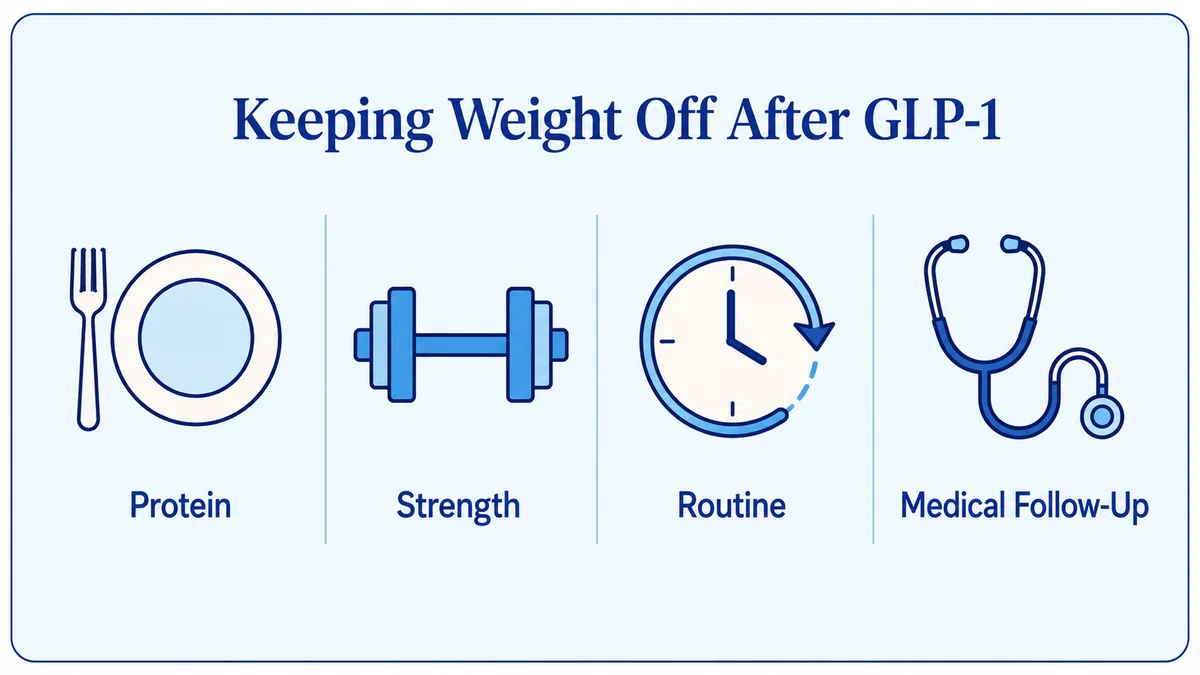
- Protein first: keep leading meals with protein to stay full and hold muscle.
- Strength training: two to three sessions a week protects your metabolism.
- Sleep and stress: both shape appetite hormones and daily choices.
- Steady routine: regular meals, movement, and weigh-ins catch drift early.
Protecting muscle deserves special attention, since it protects the metabolism that makes maintenance easier. Our guide on protecting muscle on semaglutide covers the protein and training targets in detail, and what to eat on semaglutide helps you keep the eating patterns going.
Just as important is the mental side of maintenance. The all-or-nothing mindset, where one off day becomes a reason to abandon the plan, is one of the most common reasons habits unravel. A more forgiving approach, where you simply return to your routine at the next meal, tends to hold up far better over the years. Progress is kept by consistency across time, not by perfection on any single day.
Should you taper or stay on a maintenance dose?
There is no single right answer, and this is a decision for you and your physician. Some patients transition off semaglutide gradually once habits are solid, while others continue a lower maintenance dose because obesity is often a long-term condition. What matters is that the choice is medical and individual, not automatic.
A gradual, guided taper is generally gentler than an abrupt stop. Slowly stepping down gives your appetite and routines time to take over, rather than having the medication disappear all at once. Your provider watches how your weight and hunger respond and adjusts the plan accordingly.
Do not stop suddenly on your own
Stopping any prescription abruptly, or restarting later, is a medical decision. Talk with your provider before changing your dose so your transition is planned and monitored rather than left to chance.
How does medical follow-up help you maintain?
Ongoing follow-up turns maintenance from guesswork into a plan. Regular check-ins let your physician catch early regain, fine-tune your nutrition and training, and decide together whether to adjust or resume medication. Accountability and a professional set of eyes make a measurable difference over the long haul.
This is where a physician-led program stands apart from ordering medication online and going it alone. If your weight loss has recently slowed, that may be a natural resting point rather than a problem, which we explain in our guide on why weight loss stalls on GLP-1 medications. New to the whole approach? Start with our medical weight loss guide.
Follow-up is also where early warning signs get caught. A gradual return of appetite, a few pounds of drift, or slipping habits are all much easier to address in the first weeks than after months. Your provider can adjust nutrition guidance, revisit your training, or discuss whether restarting or continuing medication makes sense for you. Maintenance is not a single decision made the day you stop; it is an ongoing partnership that adapts as your body and your life change.
What does a realistic maintenance plan look like?
A good maintenance plan is boring in the best way. It sets a small weight range rather than a single number, names the handful of habits you will protect no matter what, and spells out exactly what you will do if you drift above your range. Deciding those responses in advance, while things are going well, keeps a few pounds from quietly becoming many.
For most people, the core of the plan is simple and repeatable. The details flex around your life in Las Cruces, your schedule, and your health, but the structure stays steady.
- A maintenance range: a few pounds up or down that you treat as normal.
- Non-negotiable habits: protein at meals and strength training each week.
- A check-in rhythm: weigh a few times a week and see your provider on a set schedule.
- A drift plan: agreed steps, and when to talk to your physician, if you climb above your range.
Catching a small drift early is far easier than reversing a large one. That is the whole logic of maintenance: not perfection, but a plan that lets you respond quickly and calmly when life gets in the way.
When should you start building maintenance habits?
The best time is now, from the very first weeks of treatment, not the day before you stop. The appetite relief semaglutide provides is actually the easiest window to practice new eating and activity patterns, because cravings are quieter and portions feel natural. Habits built during treatment are the ones that stay when the medication is gone.
- Use the low-appetite months to lock in a protein-forward way of eating.
- Establish a strength routine you actually enjoy and can keep.
- Set a simple maintenance range and a plan for what to do if you drift above it.
Think of the medication as training wheels. The goal is to build balance while they are on, so you can ride steadily once they come off. With the right habits and physician support, keeping your results is realistic.
Frequently asked questions
Do you gain the weight back after stopping semaglutide?
Many people regain some weight after stopping, but it is not inevitable. In the STEP 1 trial extension, participants regained about two-thirds of their lost weight within a year of stopping. Strong habits, adequate protein, strength training, and a supervised transition all make lasting maintenance far more achievable.
Why do people regain weight after a GLP-1 medication?
When the medication stops, its effect on appetite fades and hunger tends to return, while a lower body weight burns fewer calories. Without habits in place, that combination makes regain easy. This is why building nutrition and activity routines during treatment matters so much.
Can you stay on semaglutide long term for maintenance?
For some patients, physicians may continue a lower maintenance dose rather than stopping abruptly, because obesity is often a chronic condition. Whether long-term or maintenance dosing fits you is an individual medical decision your provider makes with you.
How do you keep weight off after stopping semaglutide?
Keep the habits you built: enough protein, regular resistance training, consistent sleep, and steady routines. A gradual, physician-guided taper rather than an abrupt stop, plus ongoing follow-up, gives you the best chance of holding your results.
Should I stop semaglutide once I reach my goal?
That is a decision to make with your physician, not on your own. Some people transition off gradually while others continue a maintenance approach. Your provider considers your health, your habits, and your goals before recommending any change.

Joanna Rachelson, MD
Dr. Joanna Rachelson is a licensed Family Medicine physician at Fountain of Youth LC in Las Cruces, NM, where she and Dr. Laura Leija-Urrea, MD, lead physician-supervised medical weight loss, hormone therapy, and IV wellness care. Meet the team.
Planning your transition off semaglutide?
Book a consultation and our Las Cruces physicians will help you build the habits and follow-up plan to keep your results.
Disclaimer: This content is for informational purposes only and is not medical advice. Results vary by individual and are not guaranteed. Semaglutide is a prescription GLP-1 medication that requires a physician evaluation, is not appropriate for everyone, and can cause side effects. Before starting, changing, or stopping any medication, consult a licensed healthcare provider.