
Key Takeaways
- Menopause weight gain is real, and it is more about body composition than the scale: fat gain speeds up while muscle slowly declines.
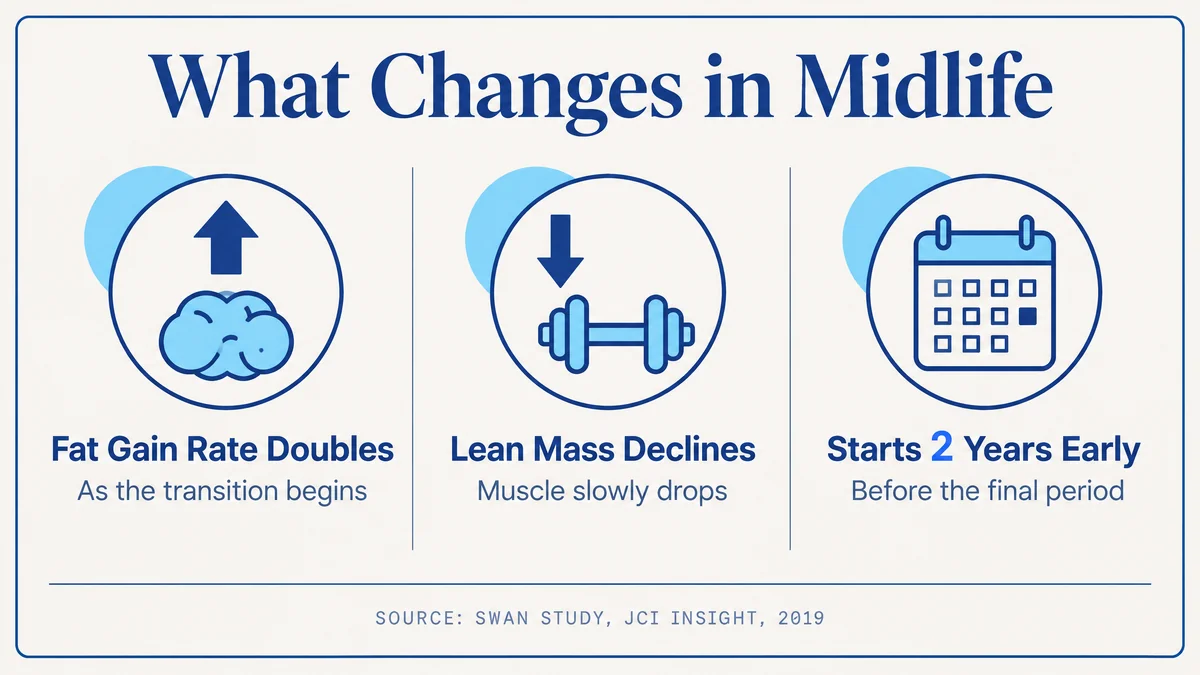
- The shift starts roughly two years before the final period and levels off about two years after it, according to the SWAN study.
- Strength training, enough protein, and better sleep do more for midlife weight than eating less and less.
- Hormone therapy treats symptoms, not weight. GLP-1 medications can help some women who qualify, as part of a supervised plan.

Women in Las Cruces often come to us with the same story: nothing about how they eat or move has changed, yet the waistband is tighter every season and the weight sits somewhere new. Menopause weight gain is not imagined and it is not a lack of willpower. It is a predictable shift in how a midlife body stores fat and holds muscle, and once you understand what is actually changing, the plan that works looks quite different from simply eating less.
This guide walks through why it happens, why it gathers around the middle, how long it lasts, and what genuinely helps, including where hormone therapy and GLP-1 medications fit and where they do not.
Why do women gain weight during menopause?
Menopause weight gain comes from several changes landing at once: falling estrogen shifts where fat is stored, muscle mass gradually declines so you burn fewer calories at rest, and sleep and stress often get worse. Aging and lifestyle play a part too. No single cause explains it, which is why one change on its own rarely fixes it.
The clearest picture comes from the Study of Women's Health Across the Nation, known as SWAN, which followed women through the transition with body scans rather than just a scale. Its 2019 analysis in JCI Insight found that at the start of the menopause transition the rate of fat gain doubled, from about 0.25 kg to 0.45 kg a year, while lean mass began to decline. Interestingly, total body weight kept rising at the same steady pace it had before. The scale barely noticed; the body underneath it did.
That is the reason so many women feel their clothes fit differently long before the number moves much. It is also why we pay as much attention to muscle as to fat when we build a plan.
Why does the weight settle around the belly?
As estrogen falls, the body tends to store more fat around the abdomen instead of the hips and thighs, including deeper fat around the organs. That is why many women notice their shape changing even when their weight has not moved much, and why the middle feels like the hardest place to make progress.
Deeper abdominal fat matters for more than how jeans fit. It is linked with insulin resistance, type 2 diabetes, and heart disease, which is one reason we check labs rather than guessing. The useful news is that it is not a special kind of fat that ignores normal rules. It responds to an overall calorie deficit, enough protein, strength training, and better sleep, the same as fat anywhere else.
What will not shrink a menopause belly
- Hundreds of crunches. You cannot spot-reduce fat from one area.
- Detox teas, cleanses, and "hormone balancing" supplements with no evidence behind them.
- Cutting calories so low that you lose muscle along with fat.
Is menopause weight gain permanent?
No. In the SWAN study, the faster fat gain and muscle loss began about two years before the final period, continued until about two years after it, and then leveled off. The transition is a window, not a permanent slope. What it leaves behind, however, does not reverse on its own.
Think of it as a stretch of a few years when the body is quietly working against you, followed by a calmer period where effort pays off more predictably. Starting good habits during the transition is easier than trying to undo several years of muscle loss afterward, but it is never too late to start.
How can you lose weight during menopause?
The most reliable approach combines strength training at least two days a week, enough protein at every meal, a moderate calorie deficit rather than a severe one, and protected sleep. Because muscle loss is part of the problem, plans that only cut food tend to stall and leave you weaker. Physician support adds labs and, where appropriate, medication.
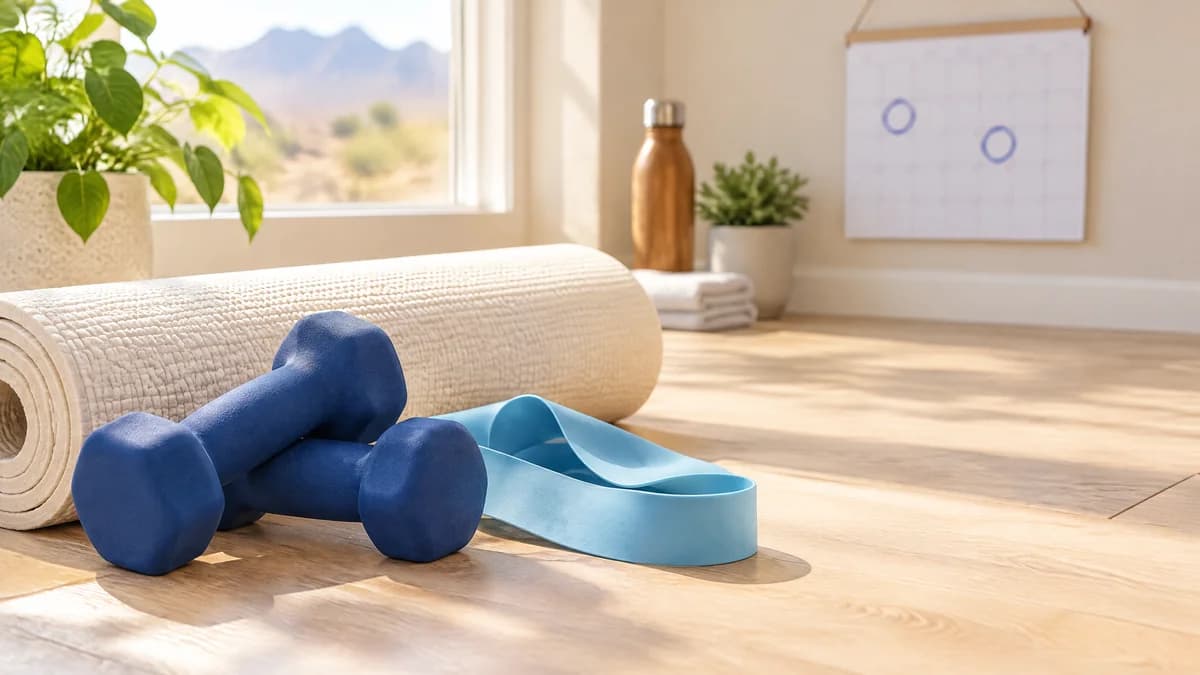
- 1Lift something, twice a week. The CDC recommends at least 150 minutes of moderate activity each week plus at least 2 days of muscle-strengthening activity. Hand weights, bands, or body weight all count. This is the single best tool against the muscle loss SWAN describes.
- 2Build meals around protein. It helps you stay full and gives muscle what it needs to rebuild. Our guide on what to eat on semaglutide has practical meal ideas that work whether or not you take a medication.
- 3Aim for a modest deficit, not a crash. Very low intake speeds muscle loss, which is exactly the wrong direction in midlife.
- 4Treat sleep as part of the plan. Night sweats and broken sleep make appetite harder to manage the next day. If symptoms are wrecking your nights, that is worth raising with a physician on its own.
- 5Walk after meals. Even ten minutes helps with blood sugar and appetite. In the Las Cruces summer heat, early mornings and evenings are the comfortable times to get out.
Our approach is simple: protect the muscle you have, then lose the fat. A plan that only eats less usually costs women the strength they need for the next thirty years.
Does hormone therapy help with menopause weight gain?
Hormone therapy is not a weight loss treatment. It is prescribed to relieve menopause symptoms such as hot flashes, night sweats, and vaginal dryness, and it is not right for everyone. Indirectly, some women find that once sleep and symptoms improve, the habits that matter for weight become much easier to keep.
The FDA's guide to menopause medicines is clear that hormone medicines have side effects and that, for some women, they can raise the chances of blood clots, heart attacks, strokes, and breast cancer. That is why the decision belongs in a conversation with a physician who knows your history, not on a supplement shelf. At Fountain of Youth LC, hormone therapy for women starts with comprehensive baseline labs reviewed by one of our two licensed MDs, and our earlier article on hormone therapy for women over 40 covers the signs that point toward it.
| Option | What it is for | Role in midlife weight |
|---|---|---|
| Strength training and protein | Keeping muscle and strength | The foundation for everyone |
| Hormone therapy | Hot flashes, night sweats, other symptoms | Indirect, through better sleep and comfort |
| GLP-1 medication | Appetite and weight, for those who qualify | Direct, with physician supervision |
Can GLP-1 medications help with weight gain after menopause?
For women who qualify medically, GLP-1 medications such as semaglutide or tirzepatide can be part of a physician-supervised plan alongside nutrition and strength training. They are prescription drugs that can cause side effects, they are not appropriate for everyone, and they work best when they protect muscle rather than replace good habits.
Research on combining treatments is early but interesting. In a study by Mayo Clinic researchers published in The Lancet Obstetrics, Gynaecology, & Women's Health in 2026, postmenopausal women using hormone therapy lost 35% more weight on tirzepatide than women on tirzepatide alone. It was a records review of 120 people, not a randomized trial, and the senior author was explicit that it cannot show hormone therapy caused the difference. We treat it as a reason to ask good questions, not as a recipe.
One practical point if you take both: the Wegovy prescribing information notes that semaglutide delays stomach emptying and may affect how oral medications are absorbed. Tell your physician about every medication you take, hormone tablets included. Our pages on medical weight loss in Las Cruces and on protecting muscle on semaglutide go further.
When should you talk to a physician?
Book a visit if your weight is climbing despite consistent habits, if symptoms are disrupting your sleep, or if you have a family history of diabetes or heart disease. Weight change in midlife can also come from thyroid problems, medications, or blood sugar changes, and labs are the quickest way to tell these apart.
- Weight gain you cannot explain, especially if it is fast
- Hot flashes or night sweats that wreck your sleep
- Fatigue, feeling cold, or hair changes that might point to the thyroid
- A personal or family history of diabetes, heart disease, or blood clots
Your first visit with us is a conversation and a plan, not a sales pitch. If you are curious what to expect, read what happens at a first weight loss consultation in Las Cruces.
Frequently asked questions
Why do women gain weight during menopause?
Several things overlap. Falling estrogen shifts where the body stores fat, muscle mass slowly declines, which lowers the calories you burn at rest, and sleep often gets worse, which makes appetite harder to manage. Life gets busier at the same time. No single cause explains it, which is why a single fix rarely works.
Is menopause weight gain permanent?
No. In the long-running SWAN study, the faster fat gain and muscle loss of the transition continued until about two years after the final period and then leveled off. That does not mean the weight leaves by itself, but it does mean the body is not on an endless upward slope, and a sensible plan can still work.
Why is belly fat so hard to lose after menopause?
Lower estrogen tends to move fat storage toward the abdomen, including the deeper fat around the organs. That fat responds to the same things as fat elsewhere: an overall calorie deficit, enough protein, strength training, and good sleep. It does not respond to spot exercises or detox products, whatever the label claims.
Does hormone therapy help with menopause weight gain?
Hormone therapy is not a weight loss treatment. It is prescribed for menopause symptoms such as hot flashes and night sweats, and it is not right for everyone. Some women find that once their sleep and symptoms improve, it is easier to stick with the habits that matter for weight. Your physician can tell you whether it fits your history.
Can semaglutide or tirzepatide help with weight gain after menopause?
For women who qualify medically, GLP-1 medications can be part of a physician-supervised plan, alongside nutrition and strength training. They are prescription drugs with side effects and are not appropriate for everyone. An observational Mayo Clinic study found greater weight loss with tirzepatide in women also using hormone therapy, but it could not show cause and effect.

Joanna Rachelson, MD
Physician at Fountain of Youth LC in Las Cruces, New Mexico, where the team provides physician-supervised medical weight loss, hormone therapy, and IV therapy. Read more about Dr. Rachelson.
Get a plan built for this stage of life.
Our physicians in Las Cruces review your labs, symptoms, and goals, then tell you plainly what will help.
Disclaimer: This content is for informational purposes only and is not medical advice. Results vary by individual and are not guaranteed. Semaglutide and tirzepatide are prescription GLP-1 medications that require a physician evaluation, are not appropriate for everyone, and can cause side effects. Hormone therapy is not a weight loss treatment and carries its own risks. Before starting, changing, or stopping any treatment, consult a licensed healthcare provider.