

Key Takeaways
- Tirzepatide is a once-a-week injection that works on two appetite and blood sugar signals, GIP and GLP-1.
- The dose starts at 2.5 mg and goes up slowly, which is the main way stomach side effects are kept in check.
- It is not right for everyone. Labs, your health history, and a physician evaluation decide whether it fits you.
- Brand-name tirzepatide is FDA-approved. Compounded tirzepatide is not, so always ask which form you are getting.

Patients in Las Cruces often ask about tirzepatide by name. Some heard about it from a friend, some saw it online, and some already tried semaglutide and want to know if this is different. It is a strong tool for the right person, and it works best when you know what to expect before the first shot.
This guide covers how tirzepatide works, who it is approved for, how the dose is raised, the side effects most people notice, and the difference between the brand-name drug and compounded versions.
What is tirzepatide?
Tirzepatide is a once-a-week injection that copies two natural gut hormones, GIP and GLP-1. Together they lower appetite, help you feel full sooner, slow how fast the stomach empties, and help the body manage blood sugar. It was first approved as Mounjaro for type 2 diabetes, and in 2023 the FDA approved it as Zepbound for chronic weight management.
The two-signal design is the main thing that sets it apart from semaglutide, which acts on GLP-1 alone. In the large SURMOUNT-1 trial, published in the New England Journal of Medicine, adults without diabetes lost more weight on tirzepatide than on placebo over 72 weeks, alongside diet and exercise advice. Those were study averages. Some people lost much more and some lost much less, so treat them as a sign of what is possible, not a promise. If you are weighing the two medicines, our semaglutide vs. tirzepatide guide compares them side by side.
Who is tirzepatide for?
The FDA approval for weight management covers adults with a BMI of 30 or more, or a BMI of 27 or more plus at least one weight-related condition, such as high blood pressure, high cholesterol, type 2 diabetes, or sleep apnea. It is meant to be used with a lower calorie diet and more activity, not instead of them.
Some people should not take it at all. The prescribing information notes that tirzepatide carries a boxed warning about thyroid C-cell tumors seen in animal studies, and it should not be used by anyone with a personal or family history of medullary thyroid cancer or a condition called MEN 2. It is also not used during pregnancy.
Tell your physician before you start if you have
- Had pancreatitis or gallbladder problems
- Kidney disease, or diabetes treated with insulin or a sulfonylurea
- Diabetic eye disease
- Plans to get pregnant, or you use birth control pills
That last point matters more than most people expect. The same prescribing information says tirzepatide can make birth control pills work less well for a few weeks after you start and after each dose increase, so a backup method may be needed during those weeks.
How is the tirzepatide dose raised?
Tirzepatide starts at 2.5 mg once a week for four weeks. After that, the dose goes up by 2.5 mg at a time, at least four weeks apart, until you reach a maintenance dose of 5, 10, or 15 mg a week. The first dose is a starter dose to let your stomach adjust. It is not expected to do much for weight on its own.
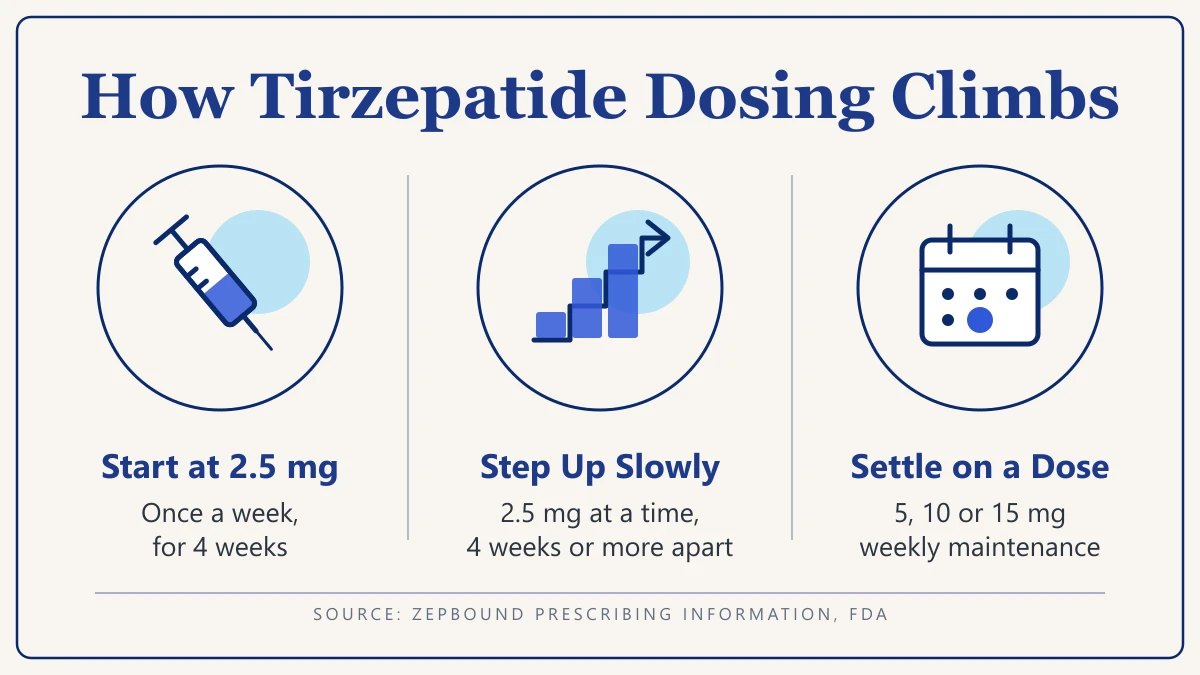
Going slowly is not a sign that something is wrong. The highest dose is not the goal. The goal is the lowest dose that controls your appetite and that you can stay on comfortably.
We would rather hold a dose for an extra month than push you into a week of nausea. Slow and steady is how people stay on it.
What side effects should you expect on tirzepatide?
The most common side effects are stomach-related: nausea, diarrhea, vomiting, constipation, belly pain, and indigestion. They are most likely in the days after a dose increase and often ease as your body adjusts. Some people also notice mild redness or itching where they inject.
- 1Eat smaller meals and stop at the first sign of fullness. Your stomach empties more slowly now, so a normal plate can feel like too much.
- 2Drink water through the day. In the dry Las Cruces climate it is easy to fall behind, and vomiting or diarrhea can dehydrate you quickly.
- 3Go easy on greasy and very sweet foods, which tend to make nausea worse. Our guide on what to eat on a GLP-1 has meal ideas that work on tirzepatide too.
- 4Keep protein high and keep moving. Fast weight loss can take muscle with it. Read how to protect muscle on a GLP-1.
Call your physician right away for severe belly pain that does not go away, pain that spreads to your back, vomiting that stops you from keeping fluids down, yellow skin or eyes, or signs of an allergic reaction such as swelling of the face or trouble breathing.
Is compounded tirzepatide the same as the brand-name drug?
No. Brand-name tirzepatide is FDA-approved. Compounded tirzepatide is mixed by a pharmacy and is not FDA-approved, which means the FDA has not reviewed it for safety, effectiveness, or quality.
During the national shortage, many patients could only get compounded versions. The FDA warns that unapproved versions skip its review for safety, effectiveness, and quality, and that some products sold in the U.S. carry fake pharmacy labels. The FDA has also declared the national tirzepatide shortage over. Our advice is simple: wherever you get tirzepatide, ask which form it is, where it is made, and who checks your dose. A product bought online with no physician involved is the riskiest option of all.
| Question | Brand-name | Compounded |
|---|---|---|
| FDA-approved? | Yes | No |
| Who makes it? | The drug maker | A compounding pharmacy |
| What to ask | Cost and coverage | Which pharmacy, and how the dose is measured |
How do you start tirzepatide in Las Cruces?
At Fountain of Youth LC, tirzepatide starts with a consultation, lab work, and a review of your health history with one of our two licensed physicians. If it is a good fit, we explain the dose plan, how to inject, and what to do about side effects, and we see you again as the dose goes up. If it is not a good fit, we tell you so and talk through other options.
You can read how our medical weight loss program in Las Cruces works, see current prices, including the new patient first month, on our pricing page, or read what happens at a first weight loss consultation. Patients also come to us from Mesilla, Anthony, and El Paso, and the whole visit can be in English or Spanish.
Frequently asked questions
What is tirzepatide?
Tirzepatide is a once-a-week injection that acts on two gut hormone signals, GIP and GLP-1. It lowers appetite, helps you feel full sooner, and helps control blood sugar. Under the brand name Zepbound it is FDA-approved for chronic weight management in adults who meet certain weight criteria.
Who can take tirzepatide for weight loss?
The FDA approval covers adults with a BMI of 30 or more, or 27 or more with at least one weight-related condition such as high blood pressure or type 2 diabetes. It is not for everyone. People with a personal or family history of medullary thyroid cancer or MEN 2 should not take it, and a physician evaluation decides whether it fits you.
How fast does tirzepatide work?
Many people notice less hunger in the first few weeks, but the dose starts low on purpose, so weight loss usually builds over several months as the dose is raised. Results vary a lot from person to person and are not guaranteed.
What are the most common side effects of tirzepatide?
The most common ones are stomach-related: nausea, diarrhea, vomiting, constipation, belly pain, and indigestion. They tend to show up when the dose goes up and often ease with time. Severe belly pain, signs of an allergic reaction, or trouble keeping fluids down need a call to your physician right away.
Is compounded tirzepatide the same as Zepbound?
No. Compounded tirzepatide is mixed by a pharmacy and is not FDA-approved, so the FDA has not reviewed it for safety, effectiveness, or quality. If you are offered tirzepatide anywhere, ask which form it is and where it comes from.

Joanna Rachelson, MD
Physician at Fountain of Youth LC in Las Cruces, New Mexico, where the team provides physician-supervised medical weight loss, hormone therapy, and wellness care. Read more about Dr. Rachelson.
Find out if tirzepatide fits you.
Our physicians in Las Cruces check your labs and history first, then tell you plainly whether it is a good option.
Disclaimer: This content is for informational purposes only and is not medical advice. Results vary by individual and are not guaranteed. Tirzepatide is a prescription medication that requires a physician evaluation, is not appropriate for everyone, and can cause side effects. Compounded tirzepatide is not FDA-approved. Before starting, changing, or stopping any treatment, consult a licensed healthcare provider.